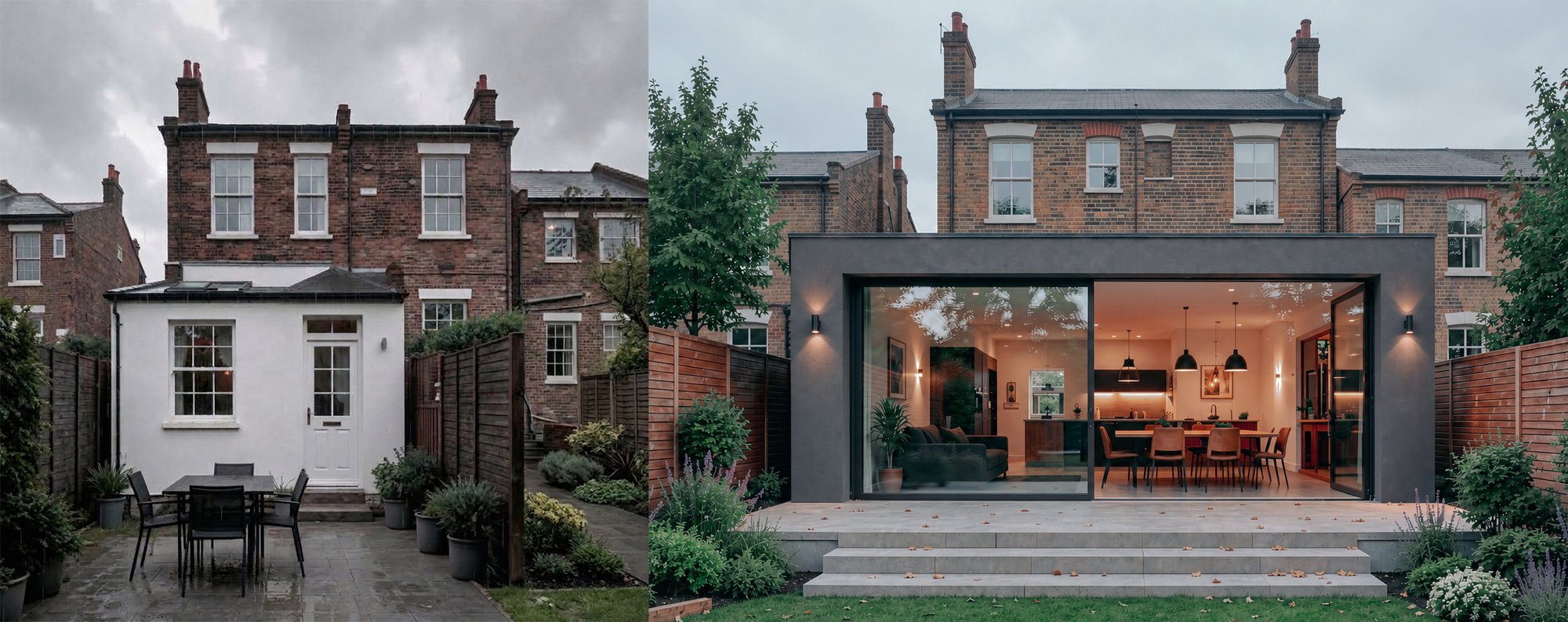
A refused application is reviewed by a director, with a clear recommendation on resubmission, appeal or redesign.
The brief
A refused application is reviewed by a director, with a clear recommendation on resubmission, appeal or redesign.
Approach
Most refusals turn on bulk, overlooking or the relationship with the street rather than on the principle of development. The studio reads the decision notice, the officer's report and the policy context to identify the grounds that can be addressed.
Planning and regulation
Resubmission, appeal and lawful development routes are compared on the evidence. Where redesign is required, it is directed at the specific reasons for refusal.
Delivery
The studio prepares the revised application or appeal and manages it through to determination.
Fees
Fees are fixed for each stage and confirmed in writing once the scope is agreed. Construction cost depends on the site, the specification and the procurement route, and is established through an indicative cost plan at feasibility stage.
What you send
The decision notice, the refused drawings, and the address. A photo of the rear elevation if you have one. That is enough for a director to read the file.
What we do
A director reviews it on the day it is received and advises whether a resubmission, a lawful development route or a revised massing is the appropriate next step.
What happens next
A written fixed fee before Stage 1. We do not take a percentage of build cost. You see the number before any new drawings.
Who it is for
Homeowners in London, and work in Manchester and Birmingham. Not a remote drawing mill. One of the two directors runs the job.
Common questions
Is a new application required, or can the previous one be amended?
Most householder refusals are followed by a fresh application. If the decision is recent, a resubmission of a changed scheme is often the faster route than an appeal. Where the officer asked for a modest change, we can sometimes treat it as an amendment. We read the reasons first and tell you which it is.
How soon should action be taken after a refusal?
Read the notice the week it arrives. Appeal windows on householder decisions are short. A redesigned resubmission can wait for a better scheme, but the notice should not sit in a drawer.
Appeal or redesign?
We redesign when the reasons are about bulk, overlooking or a drawing that does not fit the street. We appeal when the refusal is wrong on the policy. We will say which we would spend your money on.
What does the first meeting cost?
There is no charge for the initial meeting. The Stage 1 fee is confirmed in writing before any drawings are prepared.
Send the notice. A director replies the same working day.