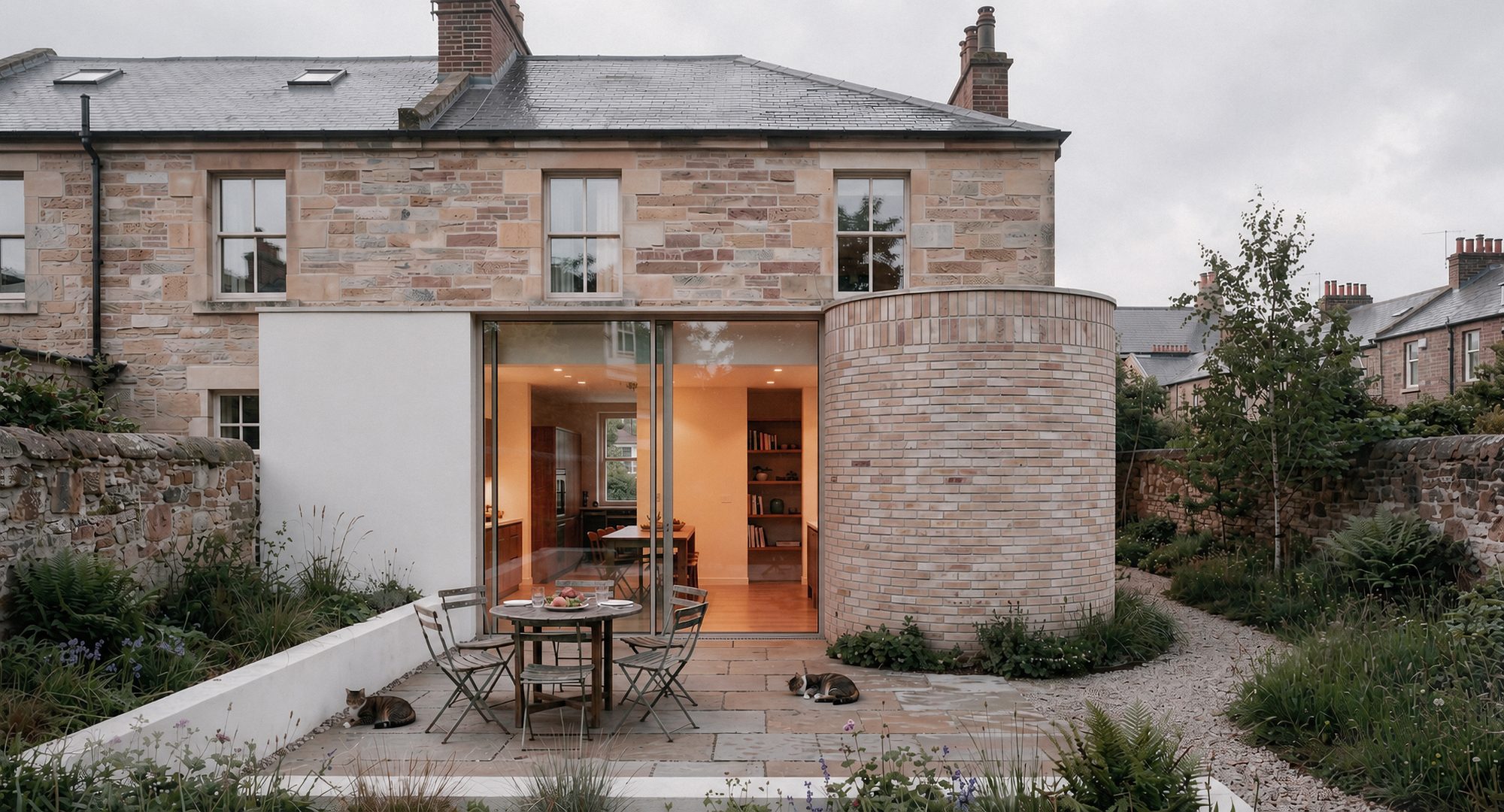
Work to a listed building begins with an understanding of its significance: what is special about it, and where change can be accommodated.
The brief
Work to a listed building begins with an understanding of its significance: what is special about it, and where change can be accommodated.
Approach
Historic building surveys and heritage statements establish the evidence on which the design is based. New work is designed to be legible, reversible where possible, and respectful of the fabric it adjoins.
Planning and regulation
Listed building consent is required for any works affecting the character of a listed building, internally or externally. Unauthorised works are a criminal offence, so the consent route is established before design proceeds.
Delivery
The studio prepares the consent application, coordinates with the local authority's conservation officer and, where relevant, Historic England, and oversees the works.
Fees
Fees are fixed for each stage and confirmed in writing once the scope is agreed. Construction cost depends on the site, the specification and the procurement route, and is established through an indicative cost plan at feasibility stage.
Common questions
Does everything need consent, even inside? +
Almost everything that affects the building’s character. Some routine like-for-like repairs do not, but the line is finer than most owners assume. We establish exactly what needs consent at the start of every project, in writing.
How long does consent take? +
Statutory eight weeks. Pre-application discussion typically adds four to six weeks up front but shortens the formal determination. Total from starting design: four to eight months on complex applications.
Can a listed building be modernised? +
Almost always, and often substantially. Kitchens, bathrooms, services and extensions are achieved in listed buildings every week. What is not usually possible is wholesale gutting or interventions that erase the historic core.
What is the difference between Grade I, II* and II? +
Relative significance. All three carry the same consent requirement; the grade affects how sensitive the officer’s judgement will be.
Is planning permission also required? +
Often yes. Planning for changes of use and extensions; listed consent for works affecting character. Where both are needed we prepare them in parallel.
What if works were done without consent? +
Specific advice on the facts needed. Sometimes a retrospective application regularises; sometimes undoing the works is pragmatic. Enforcement has no time limit on listed buildings. We advise without judgement.
Does the studio work with Historic England? +
Yes. HE is a statutory consultee on Grade I and II* applications and some Grade II. Where consulted, we deal with them directly.
Do listed buildings have to meet current building regulations? +
Yes, but the regulations recognise that historic buildings sometimes cannot meet current standards without unacceptable heritage harm. Reasonable provision is interpreted in light of significance.
For owners and prospective purchasers of listed buildings, the initial consultation is. A director will visit where practical.