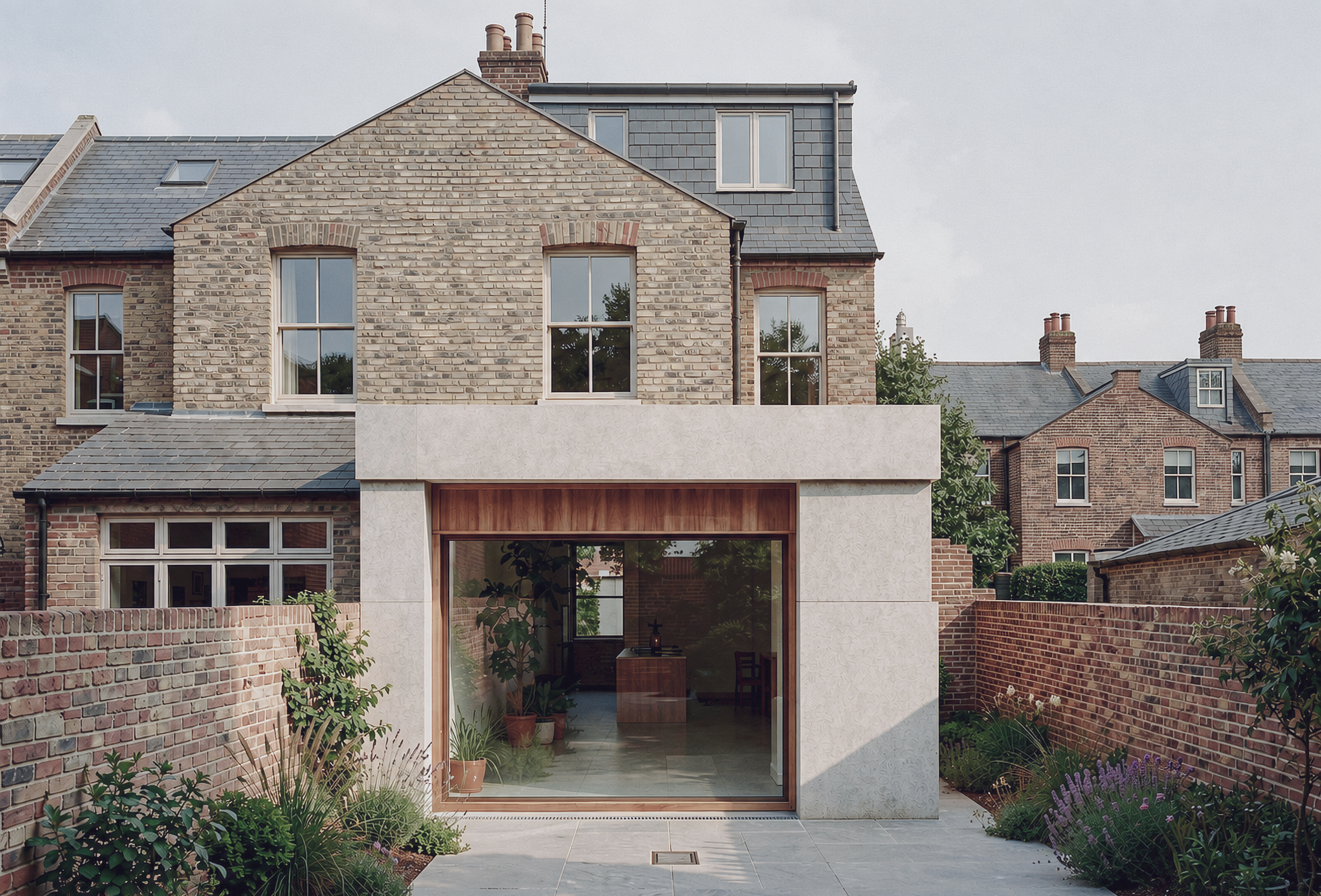
Camden is one of the most tightly controlled residential planning boroughs in London. Thirty-six conservation areas, widespread Article 4 directions, and a design culture that expects the original house to stay visually dominant. That is exactly the work we take on from Paul Street.
Typical projects: rear and side-return extensions on Victorian terraces in Kentish Town, Dartmouth Park and Gospel Oak; loft conversions where the rear roof slope is visible; listed building consent in Hampstead, Highgate and Primrose Hill; and basement or lower-ground infills where light and neighbour amenity are the real tests.
Camden’s householder process rewards drawings that already answer the officer’s questions: depth against the 3m / 45-degree tests, materials that match London stock brick and timber sashes, and a roof form that does not shout above the terrace. We set those constraints in the first week — not after a refusal.
If you already have a refused Camden application, bring the decision notice. We read the reasons, not the rumour, and tell you whether a redesign or an appeal is the appropriate next step.
Related services
Rear extensions · Loft conversions · Planning applications · Listed buildings · If planning was refused
Questions
Is planning permission required for a rear extension in Camden? On most terraces in conservation areas, yes. Permitted development is often removed by Article 4. We check the property, the map and the history before we draw.
How long does Camden take to decide a householder application? The statutory target is eight weeks from validation. Heritage or neighbour-sensitive schemes can run longer. We programme for that, not a fantasy date.
Can the studio take over from another drawing service? Yes. Many of our planning recoveries start from a refused pack. We do not pretend those drawings were wasted; we reuse what is true and replace what is weak.